Phone: +86 15627231758 | Email: yunjian@wpcwallsolutions.com
-scaled.png)
Hollow vs Solid WPC Fluted Wall Panels: How to Choose for Your Project
Compare YUNJIAN hollow and solid WPC fluted wall panels by structure, dimensions, coverage, and weight. Both ranges use PUR hot-melt lamination and clip-fit installation.

Hollow and solid WPC fluted wall panels can create a similar decorative look, but their internal structures serve different project needs. For distributors and contractors, the right choice depends on the installation site, handling requirements, expected contact with the wall, and the finish the buyer wants. This guide compares two published YUNJIAN models so you can ask better questions before ordering samples or placing a bulk order.
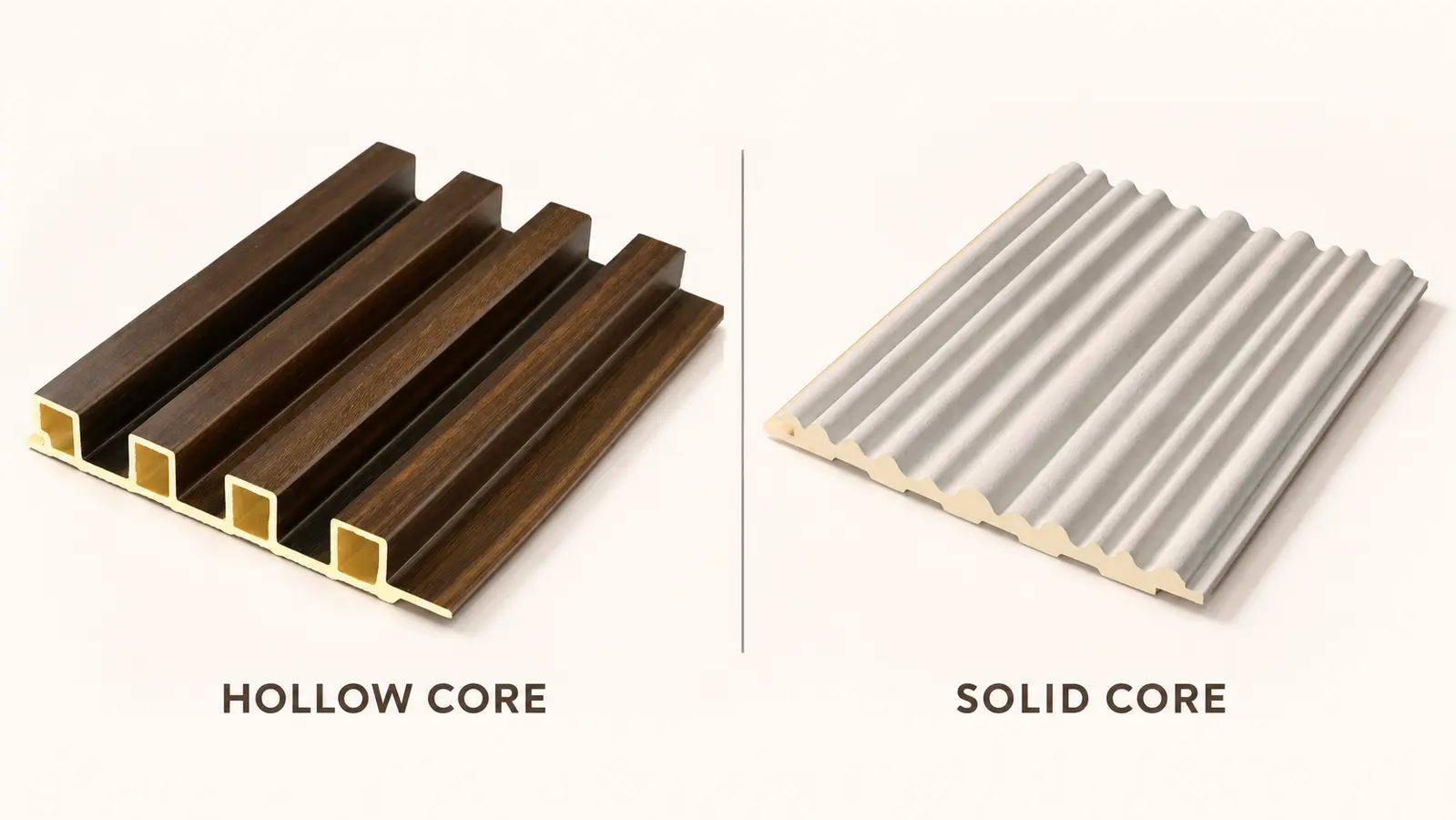
Hollow vs Solid WPC Fluted Wall Panels: The Main Difference
A hollow profile uses internal cavities to reduce weight. It is a practical option when easier handling is a priority for an interior feature wall. A solid-core profile has a denser structure and a more substantial feel. Across YUNJIAN’s hollow and solid WPC fluted panel ranges, both use PUR hot-melt lamination and a clip-fit installation system. These are shared features, so the main differences to compare here are the core structure, profile dimensions, coverage, and weight. Neither construction is the right choice for every wall: compare the actual model specifications and the requirements of your project.
Comparison of Two YUNJIAN Models
| Specification | Decorative Hollow Model | Solid-Core Model |
|---|---|---|
| Structure | Hollow WPC | Solid-core WPC |
| Panel width × thickness | 204 × 15 mm | 158 × 16 mm |
| Effective coverage width | 195 mm | 150 mm |
| Standard length | 3000 mm | 3000 mm |
| Approximate weight | 950 g per linear meter | 1150 g per linear meter |
| Surface finish | PUR hot-melt lamination | PUR hot-melt lamination |
| Installation method | Clip-fit installation | Clip-fit installation |
These figures describe the two linked products, not every hollow or solid panel in the range. Because their effective widths differ, compare the number of panels and total material needed per finished wall area. Weight per linear meter alone is not a like-for-like measure of weight per square meter.
When to Choose a Hollow WPC Fluted Panel
For a different surface design, explore our Wave WPC Wall Panel. Its 148 × 15 mm hollow wave profile offers a curved pattern for interior feature walls. Confirm the finish, quantity, and installation details when selecting a profile for your project.
Consider a hollow profile for an interior decorative wall when lower panel weight can make transport, handling, and installation more convenient. It can work well for feature walls in apartments, hotel guestrooms, offices, and showrooms where the design brief calls for a fluted appearance. Check the specific profile, wall substrate, and fixing method before specifying it for a project.
YUNJIAN’s Decorative Hollow WPC Fluted Wall Panel is one example. Its product page lists a 204 × 15 mm profile, 195 mm effective width, and 3000 mm standard length. Ask for a sample if color, texture, or installation details are important to your buyer.
When to Choose a Solid-Core WPC Fluted Panel
Consider a solid-core profile when the project requires a solid internal structure or when its dimensions, effective coverage, and weight suit the wall design. The PUR Laminated Solid Core WPC Fluted Wall Panel is intended for interior applications such as hotel, office, retail, and residential feature walls. Like the hollow example, it uses PUR hot-melt lamination and clip-fit installation.
The solid-core model shown above has a different coverage width from the hollow model. Before comparing quotations, confirm the panel count, matching trims, packaging, and installation materials required for the same wall area.
For a 12 mm thick solid profile, explore our 163 × 12 mm solid WPC fluted wall panel. It has a 150 mm effective coverage width, a 3000 mm standard length, and an approximate weight of 1350 g/m. Compare these specifications with the 158 × 16 mm example in the table above when choosing a profile for your project.
Five Checks Before a Wholesale or Project Order
- Application: Identify the room, wall location, expected contact, and any project-specific performance requirements. These two examples are interior wall products.
- Coverage: Share wall dimensions and ask for a quantity calculation based on effective coverage width, cuts, corners, and finishing pieces.
- Finish approval: Review physical samples under the lighting used in your market or project. Confirm the selected color and surface finish before bulk production.
- Installation: Confirm wall preparation, compatible clips, and edge details for the chosen profile and substrate.
- Documents: Request the test reports relevant to the selected product and your destination market; do not assume every profile has the same rating.
Which Profile Should You Request?
If you are choosing between hollow and solid WPC fluted wall panels, send the wall dimensions, intended application, desired finish, and estimated quantity. YUNJIAN can recommend suitable profiles and discuss samples, OEM/ODM options, custom lengths, and packaging for your order. You can also browse the full WPC Fluted Wall Panel collection before making a shortlist.
Contact YUNJIAN with your project details to request product recommendations and a factory quotation.